


Blow air through hoses to check PCV?


Thread Starter
|
Senior Member
Joined: May 2008
Posts: 111
Likes: 0
From: Hampton Roads
 Blow air through hoses to check PCV?
From the many posts on the PCV system, seems that the common ways to check is the system is functioning properly is to test for a slight vacuum at the oil fill hole or dipstick when the engine is running by looking for smoke or covering the holes with plastic.
What about simply blowing air through the PCV hose that connects at the top of the valve cover? In my experimentation, when I remove the hose, cover the hole in the valve cover with my finger, and blow into the hose, I can hear and feel air coming out of the flame trap. If I remove the dip stick, I get air. If I cover the flame trap with my finger and blow with the dip stick installed properly, I can feel pressure building.
Is this a viable way to test if the PCV system is clogged???
What about simply blowing air through the PCV hose that connects at the top of the valve cover? In my experimentation, when I remove the hose, cover the hole in the valve cover with my finger, and blow into the hose, I can hear and feel air coming out of the flame trap. If I remove the dip stick, I get air. If I cover the flame trap with my finger and blow with the dip stick installed properly, I can feel pressure building.
Is this a viable way to test if the PCV system is clogged???

Administrator
Joined: Mar 2009
Posts: 15,736
Likes: 36
From: Albuquerque, NM
I have not seen those proceedures in the owners manual or any repair manuals. There is always the chance that you could injest some oil or fumes that are not healty for human consumption.
Just replace the system every 10 years or 100,000 miles unless you suspect that it is clogged. If you pull the dipstick and do NOT see smoke, that is NOT a 100% test of it's serviceability. Mine did not smoke but was clogged.
I read where you can test the system through an advance vacuum tester. I'm not smart enough to do that so I just replaced all of ours.
https://volvoforums.com/forum/volvo-...v-54941/page2/
Just replace the system every 10 years or 100,000 miles unless you suspect that it is clogged. If you pull the dipstick and do NOT see smoke, that is NOT a 100% test of it's serviceability. Mine did not smoke but was clogged.
I read where you can test the system through an advance vacuum tester. I'm not smart enough to do that so I just replaced all of ours.
https://volvoforums.com/forum/volvo-...v-54941/page2/

Member
Joined: Dec 2011
Posts: 54
Likes: 0
S40/pcv
rspi, always like your posts.
I just ve a mech change the PCV components [black cannister and some hose going upto valve cover], while changing the t-belt. Yes the intake mfold had tobe removed.
But I wonder what is the test now to make sure the system is behaving properly.
Before the change, being at 95k, and noticing vapor/pressure coming outa open oil fill neck, was suggested to change cause its a common problem[as was told].
But now after the change, I donot notice much difference...so is it that Im seeing blowby, escaping via oil fill, when open...?
But if there is no blow by then typically,in a proper, clean OR unclogged pcv system should indicate a vacuum at the neck/oil-fill cap, when removed...?
And seems its a pretty good way to put a plastic sheet on the oilfill...neck, to verify that !
Im also told that if the pos pressure in the C Case is not remedied it will start the seals to leak...engine main seal etc.
Im new to Volvos so am in the learning process..
I just ve a mech change the PCV components [black cannister and some hose going upto valve cover], while changing the t-belt. Yes the intake mfold had tobe removed.
But I wonder what is the test now to make sure the system is behaving properly.
Before the change, being at 95k, and noticing vapor/pressure coming outa open oil fill neck, was suggested to change cause its a common problem[as was told].
But now after the change, I donot notice much difference...so is it that Im seeing blowby, escaping via oil fill, when open...?
But if there is no blow by then typically,in a proper, clean OR unclogged pcv system should indicate a vacuum at the neck/oil-fill cap, when removed...?
And seems its a pretty good way to put a plastic sheet on the oilfill...neck, to verify that !
Im also told that if the pos pressure in the C Case is not remedied it will start the seals to leak...engine main seal etc.
Im new to Volvos so am in the learning process..
Member
Joined: Dec 2011
Posts: 54
Likes: 0
S40/PCV
Oh..what if I let the pressure[C Case], escape to ambient[via a filter], and close the inlet to the Valve cover..?
I feel the pressure is causing some leak via the exh cam seal, belt side...and I see wetness inside the black plastic shroud, after 300 miles of t-belt change when this leak was totally wiped/cleaned.The T-belt, fortunately was NOT wet
I understand that seal change, also needs the cam shaft holder/cap change...and needs special tools and it ain't cheap, by some estimate close to $800.
And do you believe that Syn engine oil worsens such a leak...?
And a high mileage will be better..?[its a 1.9l turbo]
Oh..what if I let the pressure[C Case], escape to ambient[via a filter], and close the inlet to the Valve cover..?
I feel the pressure is causing some leak via the exh cam seal, belt side...and I see wetness inside the black plastic shroud, after 300 miles of t-belt change when this leak was totally wiped/cleaned.The T-belt, fortunately was NOT wet
I understand that seal change, also needs the cam shaft holder/cap change...and needs special tools and it ain't cheap, by some estimate close to $800.
And do you believe that Syn engine oil worsens such a leak...?
And a high mileage will be better..?[its a 1.9l turbo]
Last edited by Swedllander; Feb 7, 2012 at 09:01 AM. Reason: addition
Administrator
Joined: Mar 2009
Posts: 15,736
Likes: 36
From: Albuquerque, NM
I don't know about rigging things so you wont have to service it every 5 years. So, cut the hoses, take it off, put a broom stick in it, I don't know what the effects of rigging the system so it's not RIGHT will cause. What's wrong with just servicing it and doing it again the next time it needs it?
Member
Joined: Dec 2011
Posts: 54
Likes: 0
S40/pcv
1.Well, there is always some reason that PCV systems don't function as designed, expected and intended.
An ideal system should condense the oil vapors and dump the liq. back into the C case, like gasoline vapors are treated by other part of Emm system.
2. The very reason for their need[the mfr hates them], is to not vent the oil vapors into air, or even blowby escaping straight w/o going thru the cat.
On the Audis 100, 1990/95 the pcv system has allowed the gunk, to reach the intake manifold via MAF, messing up the idle, and even the injectors.
So people ve plugged the entry to the boot[before MAF], and vented the c-case to the air. That also avoids putting pressure inside the C case.
I understand some system may sense the change you make, and give an Eng light, the reason of my Q.
The problem on Volvo S40 is the extensive work needed to change these elements, like removing intake manifold.On the old Audis, with inline 5 cyl allows so much darn space that its easier to change that garbage than the oil filter.
If something is poorly designed[to minimize hardware needed, and space for it], and its a pain for the engine's neck, then its worth doing what the EPA didnot allow the mfr...in my thought.
If I asked any questions, its because of my one yr old dealing and exp with Volvos, which I find in someways better designed than Audis of 2000 plus..
Thnx
An ideal system should condense the oil vapors and dump the liq. back into the C case, like gasoline vapors are treated by other part of Emm system.
2. The very reason for their need[the mfr hates them], is to not vent the oil vapors into air, or even blowby escaping straight w/o going thru the cat.
On the Audis 100, 1990/95 the pcv system has allowed the gunk, to reach the intake manifold via MAF, messing up the idle, and even the injectors.
So people ve plugged the entry to the boot[before MAF], and vented the c-case to the air. That also avoids putting pressure inside the C case.
I understand some system may sense the change you make, and give an Eng light, the reason of my Q.
The problem on Volvo S40 is the extensive work needed to change these elements, like removing intake manifold.On the old Audis, with inline 5 cyl allows so much darn space that its easier to change that garbage than the oil filter.
If something is poorly designed[to minimize hardware needed, and space for it], and its a pain for the engine's neck, then its worth doing what the EPA didnot allow the mfr...in my thought.
If I asked any questions, its because of my one yr old dealing and exp with Volvos, which I find in someways better designed than Audis of 2000 plus..
Thnx

Senior Member
Joined: Jan 2012
Posts: 537
Likes: 1
From: Virginia
Well, I have replaced proabbly a dozen or more "oil trap" or "flame trap" they are actually called in Volvos, not PCV (but I use it to generalize the customers) 4.5 hour job (may take longer depending on severity)
Pictures speak louder.
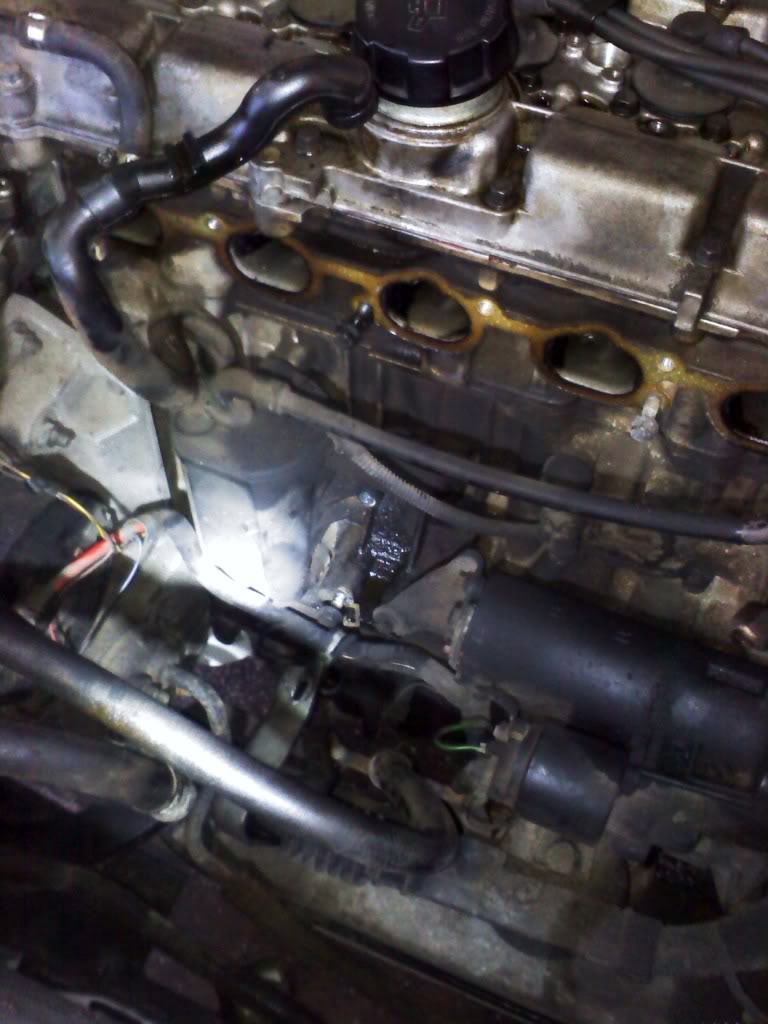
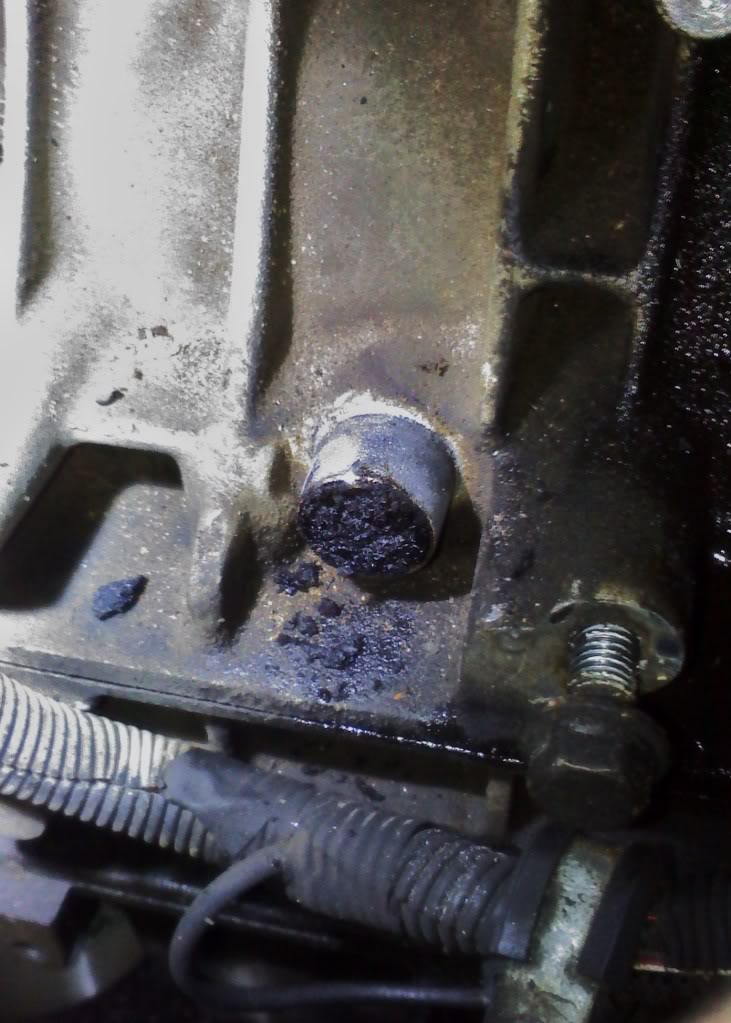
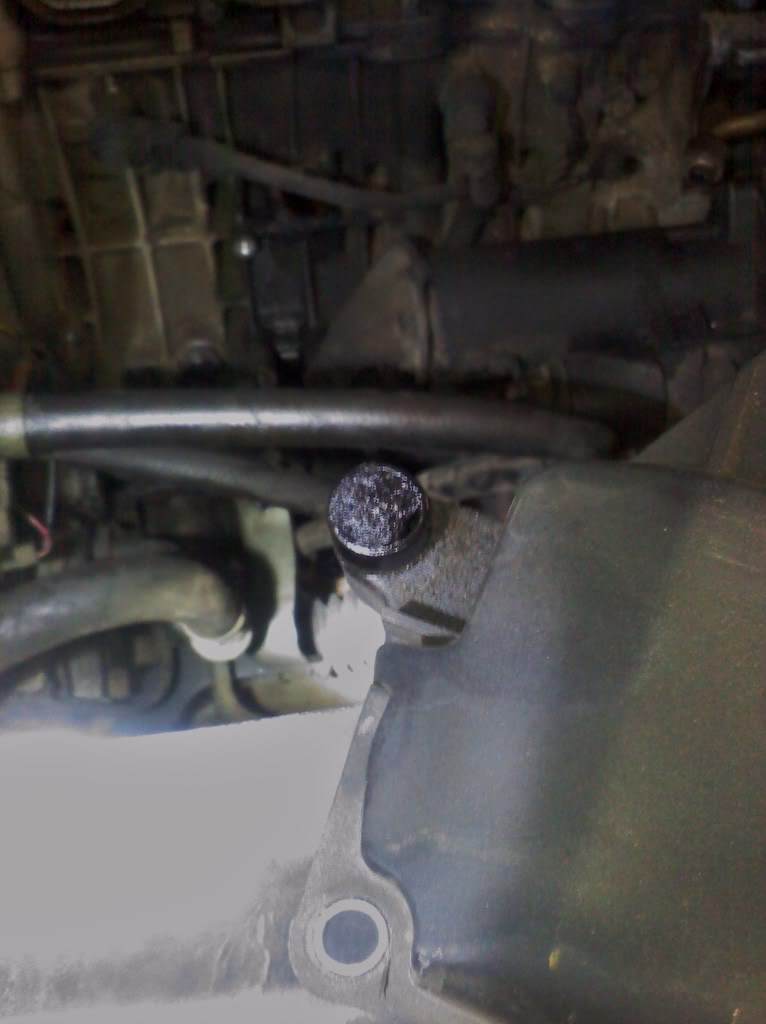
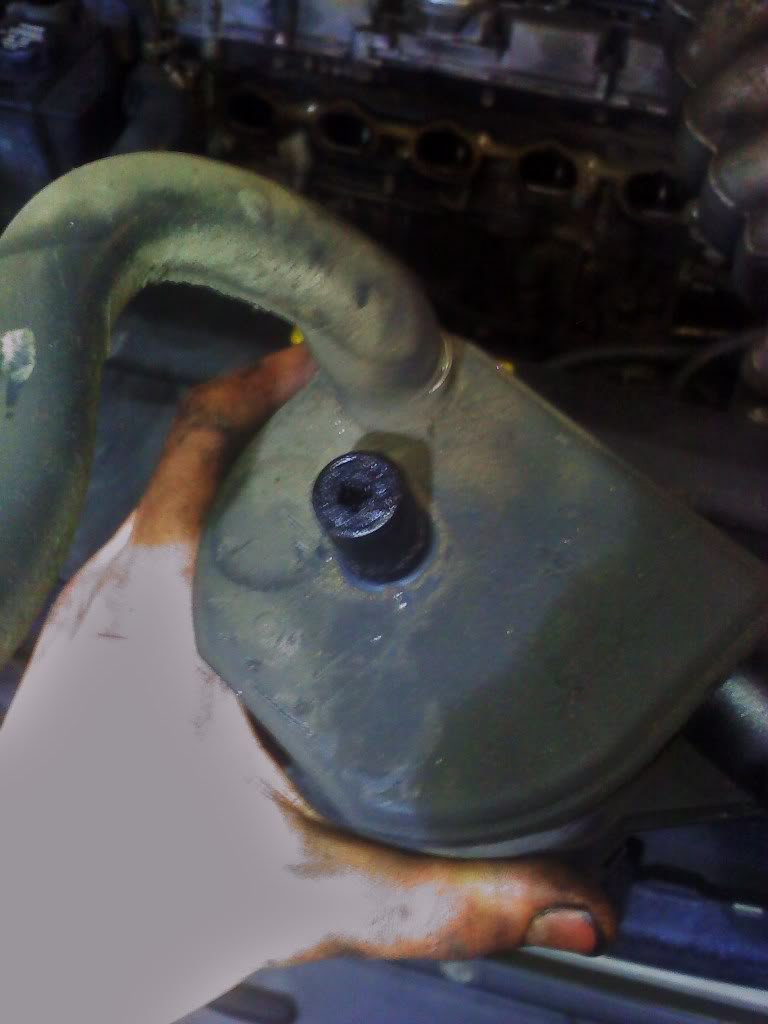
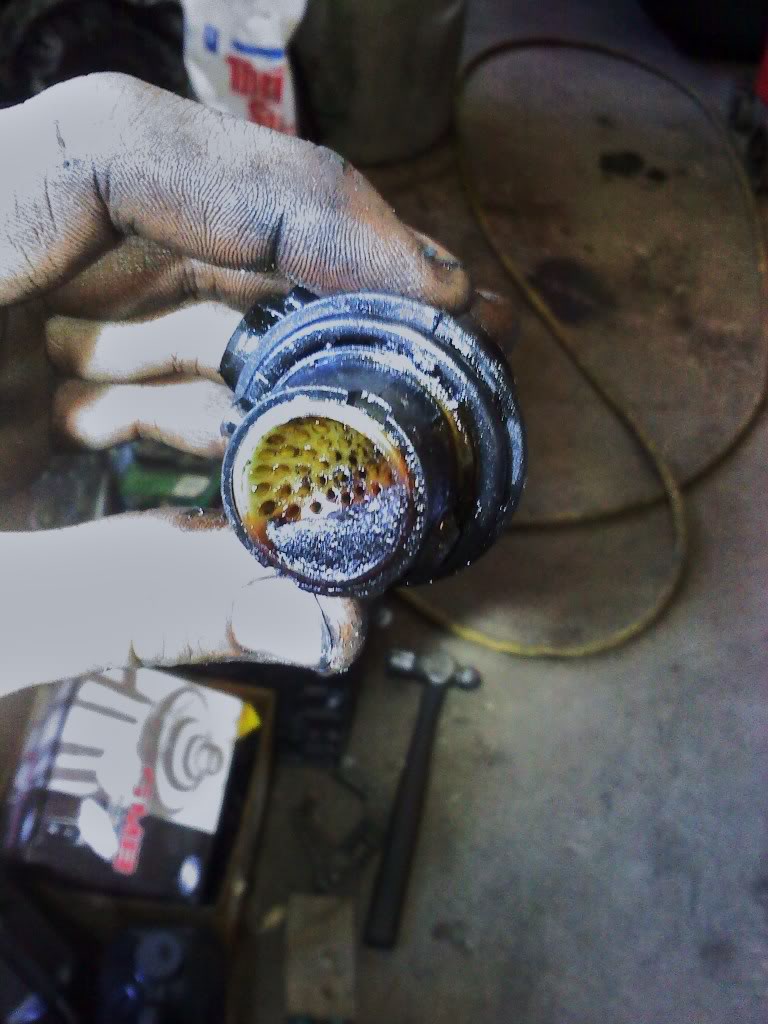
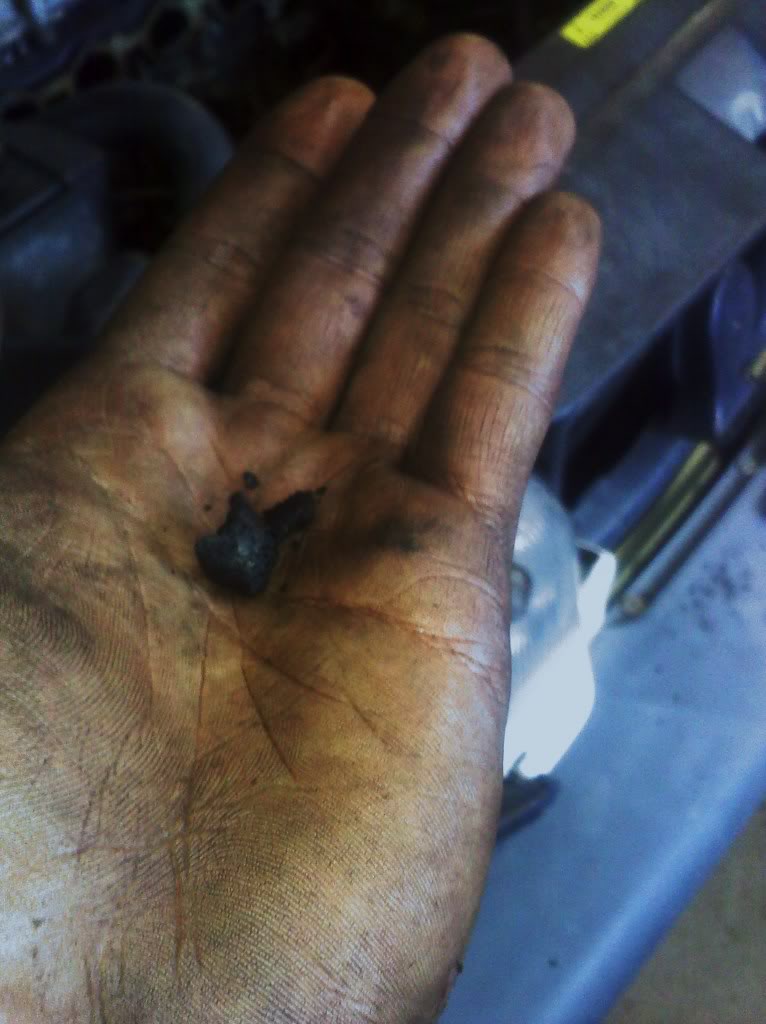
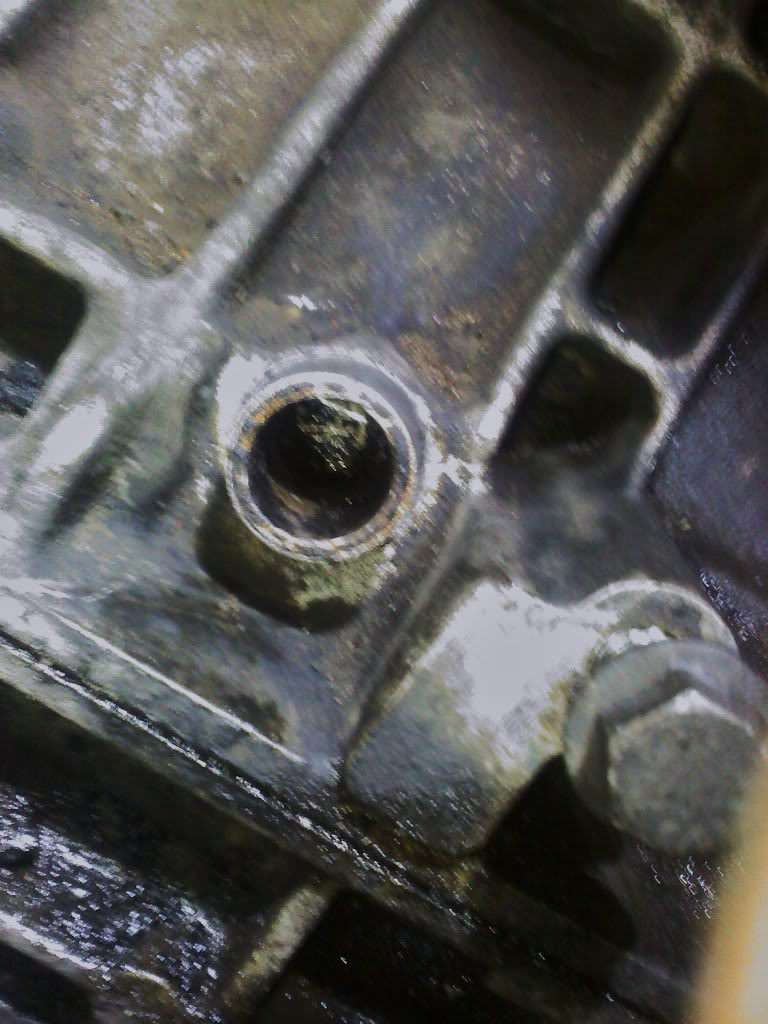
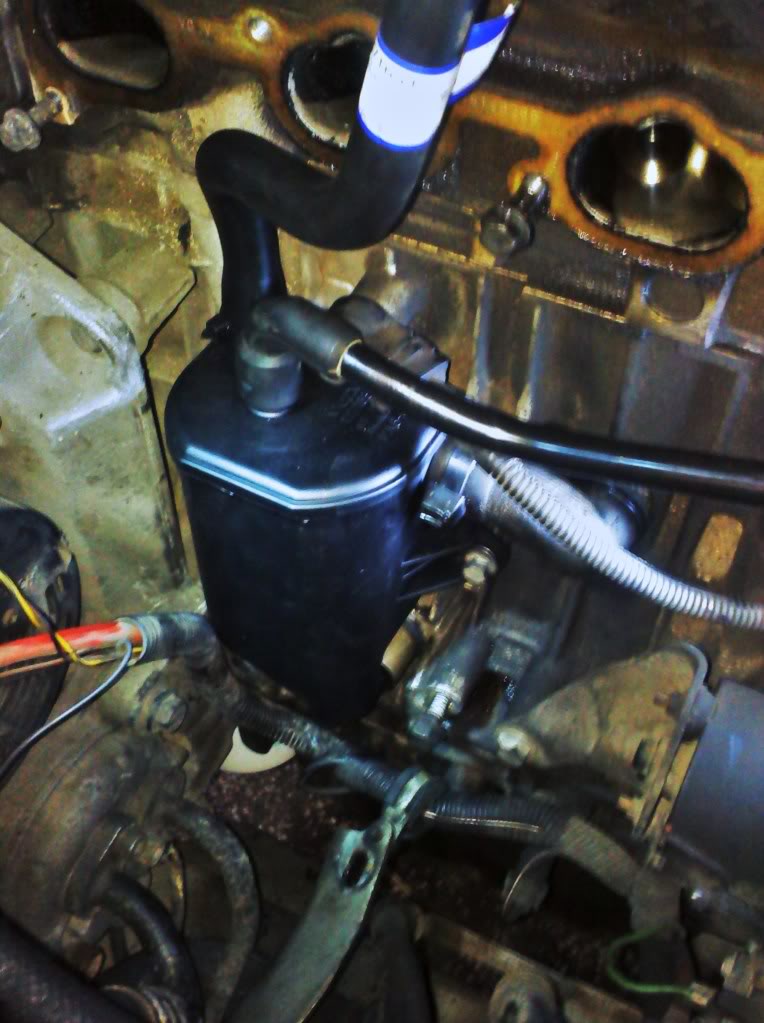
_+_+_+_+_+_+_+_+_+_+_+_+_+_ bellow is what happens when you don't replace the oil trap (example above was VERY LUCKY)
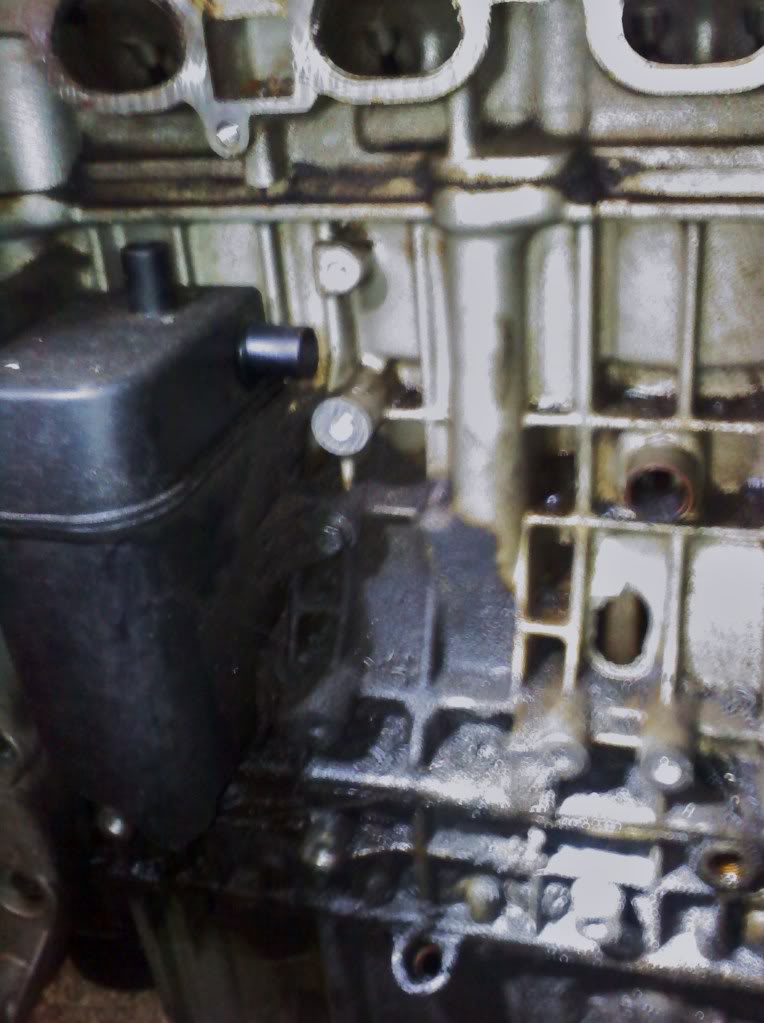
Here is the way to see if you need yours replaced. click link >> Plugged crankcase ventilation system on Volvos - YouTube
Pictures speak louder.
_+_+_+_+_+_+_+_+_+_+_+_+_+_ bellow is what happens when you don't replace the oil trap (example above was VERY LUCKY)
Here is the way to see if you need yours replaced. click link >> Plugged crankcase ventilation system on Volvos - YouTube
Administrator
Joined: Mar 2009
Posts: 15,736
Likes: 36
From: Albuquerque, NM
Was there a hole in the block in that last pic?
Why is the PCV plugged and the intake ports so clean?
My block was almost as clogged, my EGR was clogged, my head ports are dirty and my dip stick DID NOT smoke.
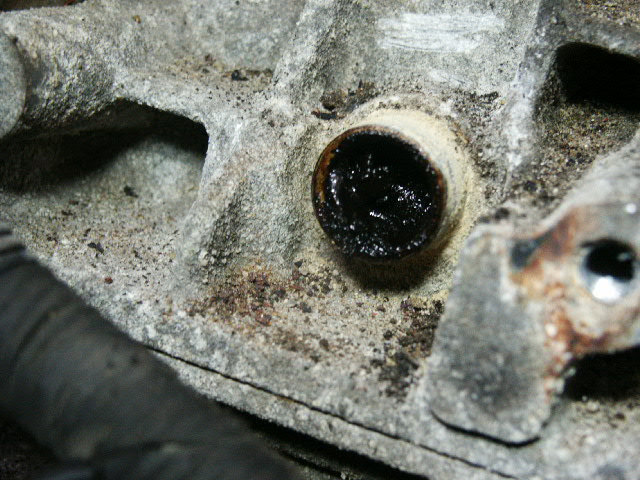
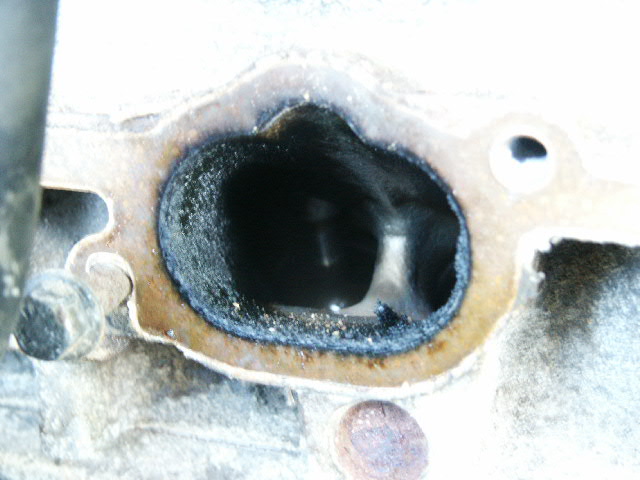
Why is the PCV plugged and the intake ports so clean?
My block was almost as clogged, my EGR was clogged, my head ports are dirty and my dip stick DID NOT smoke.
Senior Member
Joined: Jan 2012
Posts: 537
Likes: 1
From: Virginia
yes,
hole in the block was #3 cylinder, came off s80 it is in the same engine class, just +1 cylinder -- if you look right of the flame trap box you will see it
it had an intake cleaning done about 4,000 miles prior (BG products BBK product, using air atomizer)
if your dipstick tube if clogged, you won't see any, also if it is severe enough you loose all circulation, thus no smoke, just a very poor running vehicle.
hole in the block was #3 cylinder, came off s80 it is in the same engine class, just +1 cylinder -- if you look right of the flame trap box you will see it
it had an intake cleaning done about 4,000 miles prior (BG products BBK product, using air atomizer)
if your dipstick tube if clogged, you won't see any, also if it is severe enough you loose all circulation, thus no smoke, just a very poor running vehicle.
Member
Joined: Dec 2011
Posts: 54
Likes: 0
Repmnt of oil+flame trap in Volvos
[quote=Lifesgoodhere;305503]Well, I have replaced proabbly a dozen or more "oil trap" or "flame trap" they are actually called in Volvos, not PCV (but I use it to generalize the customers) 4.5 hour job (may take longer depending on severity)
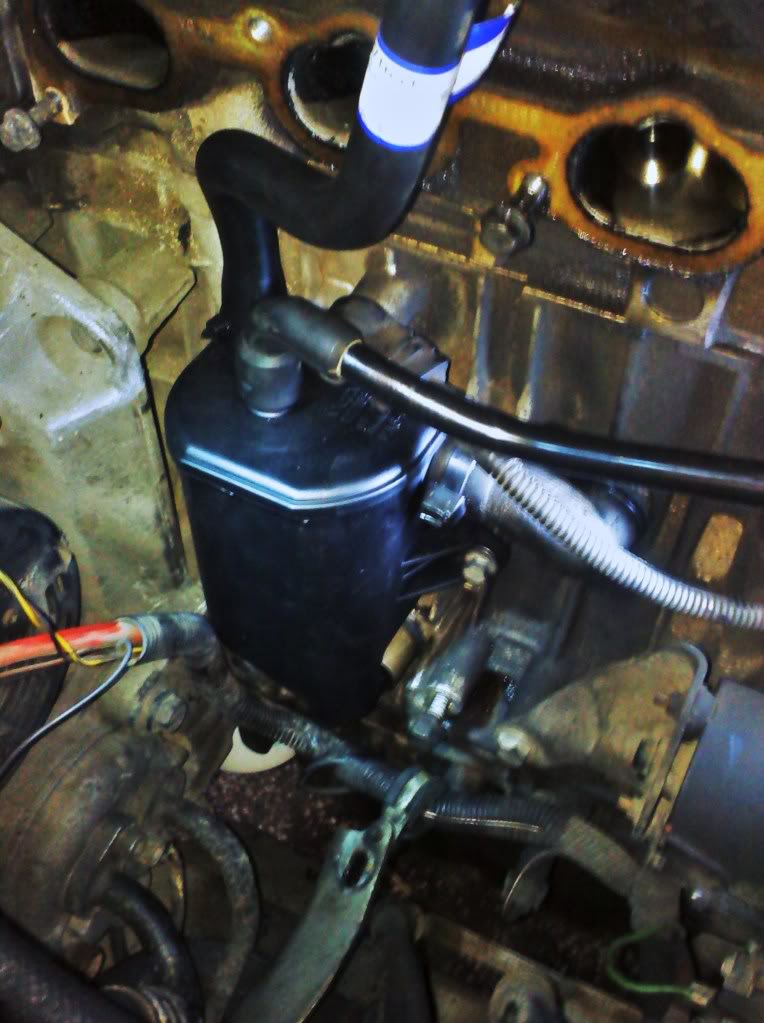
_.................................................. .........
First..many thnx to the 'Lifesgoodhere'..
It takes a good amnt of effort for people like you not only to solve problems abut also take pics and post....here !
In my case the above shown 2 or 3 elemnts were changed[on advice from some one, based on crank case preesure seen by him at the oil input/neck ]
The rest of the sytem was seen clean, even the line coming to the black can. So what was not changed[few other lines], were cleaned, but I wish i had torn the blackcan/flame trap apart to see the accumulation.
So, since we were down that far, for access, even if nothing was dirty, few items as above WERE changed, with a 'HOPE' that C Case pressure[a wrong indicator maybe], will disappear...but it didnot.
So I think [and thank again], as u show in the video, i will check again. I remember no smoke was seen coming out of the dipstick tube..when I fixed the broken plastic and sealing ring on that.
But if the C Case pressure is seen from the oil pour point, it should also be visible at the dipstick tube, as that becomes a vent point, when opened...while the oil cap is in place.
Now I ve seen this kinda of suet and gunk in Audis , messing up the MAF area severely...where non synthetic Eoil was mostly used. So to reduce this crap from forming[and accumulating in the can], do you think use of Synthetic oil should help !Or not using can worsen...!
And...I wonder what is that pressure on the oil input when cap is removed...blowby ?.
Thanks very much.
_.................................................. .........
First..many thnx to the 'Lifesgoodhere'..
It takes a good amnt of effort for people like you not only to solve problems abut also take pics and post....here !
In my case the above shown 2 or 3 elemnts were changed[on advice from some one, based on crank case preesure seen by him at the oil input/neck ]
The rest of the sytem was seen clean, even the line coming to the black can. So what was not changed[few other lines], were cleaned, but I wish i had torn the blackcan/flame trap apart to see the accumulation.
So, since we were down that far, for access, even if nothing was dirty, few items as above WERE changed, with a 'HOPE' that C Case pressure[a wrong indicator maybe], will disappear...but it didnot.
So I think [and thank again], as u show in the video, i will check again. I remember no smoke was seen coming out of the dipstick tube..when I fixed the broken plastic and sealing ring on that.
But if the C Case pressure is seen from the oil pour point, it should also be visible at the dipstick tube, as that becomes a vent point, when opened...while the oil cap is in place.
Now I ve seen this kinda of suet and gunk in Audis , messing up the MAF area severely...where non synthetic Eoil was mostly used. So to reduce this crap from forming[and accumulating in the can], do you think use of Synthetic oil should help !Or not using can worsen...!
And...I wonder what is that pressure on the oil input when cap is removed...blowby ?.
Thanks very much.
Last edited by rspi; Feb 9, 2012 at 09:51 PM. Reason: spacing
Senior Member
Joined: Jan 2012
Posts: 537
Likes: 1
From: Virginia
synthetic or conventional dosn't matter, it will happen ither way, to prevent this, change your oil on time.
There is a gauge that can read the crankcase pressures and see well before hand and prevent a flame trap from becoming clogged. Crank cases in all vehicle has pressure in them. remember the piston on the back side is moving just as fast and moves just as much air as inside the cylinders. Its when the circulation system becomes clogged that issues arise.
There is a gauge that can read the crankcase pressures and see well before hand and prevent a flame trap from becoming clogged. Crank cases in all vehicle has pressure in them. remember the piston on the back side is moving just as fast and moves just as much air as inside the cylinders. Its when the circulation system becomes clogged that issues arise.
Administrator
Joined: Mar 2009
Posts: 15,736
Likes: 36
From: Albuquerque, NM
Yes, hole in the block was #3 cylinder, came off s80 it is in the same engine class, just +1 cylinder -- if you look right of the flame trap box you will see it
It had an intake cleaning done about 4,000 miles prior (BG products BBK product, using air atomizer).
If your dipstick tube if clogged, you won't see any, also if it is severe enough you loose all circulation, thus no smoke, just a very poor running vehicle.
It had an intake cleaning done about 4,000 miles prior (BG products BBK product, using air atomizer).
If your dipstick tube if clogged, you won't see any, also if it is severe enough you loose all circulation, thus no smoke, just a very poor running vehicle.
Our S70 with 155,000 has an intake/head port that clean, yet my wagon with 190,000 looks like crap. What makes all of that deposit build in there. Now I will say that my EGR was pretty clogged up.
As for the oil dip stick tube being clogged... How can that be when I'm using it to check oil level? I figured that the system was so bad that the smoke didn't make it out of the dip stick but the dip stick still shows oil level so I don't understand the statement. My system was clogged but the car ran real strong. It smokes the tires like crazy (didn't really push it much when the system was clogged). I believe the oil was changed every 3,000 by the po.
One more thing, if I may... Why is it that some people still have smoke coming out of the dipstick after the entire system has been replaced? Would seafoam clean that up?
Last edited by rspi; Nov 2, 2013 at 10:43 AM. Reason: addition
Senior Member
Joined: Jan 2012
Posts: 537
Likes: 1
From: Virginia
yea, that engine was on the extream side of the chart. That S80 has only 80,000 miles. Never had the oil been changed. The flame trap system clogged probably around 20-30k miles. When the pressure builds it has to find a way out. I later tore the engine down, it sis not throw a rod. What it looked like was a weak place in the casting.
Yes it was being driven around. Owner was complaining about a "funny noise" and it using a lot of oil.
BG and Seafoam brands have products that will clean the crankcase. They are to be used right before an oil service.
------------
the gunk will actually act like a seal. If the dipstick is all cruddy, than thats another way to tell its time.
Also high quality oil is key in longevity of the system. Oil additives like BG products MOA, or Lucas Oil stabilizer prevent the oil vapors from clogging the system.
if no additives are used lust oil every oil change, it eventually happens, like spark plugs wearing out. And smoke comign out of the dipstick is like 50,000 miles past due anyway. the system can be clogged and you not know it, hence the special gauge used to read crankcase pressures. (which I would like to buy one, but they so expensive!!!!!!!!)
Yes it was being driven around. Owner was complaining about a "funny noise" and it using a lot of oil.
BG and Seafoam brands have products that will clean the crankcase. They are to be used right before an oil service.
------------
the gunk will actually act like a seal. If the dipstick is all cruddy, than thats another way to tell its time.
Also high quality oil is key in longevity of the system. Oil additives like BG products MOA, or Lucas Oil stabilizer prevent the oil vapors from clogging the system.
if no additives are used lust oil every oil change, it eventually happens, like spark plugs wearing out. And smoke comign out of the dipstick is like 50,000 miles past due anyway. the system can be clogged and you not know it, hence the special gauge used to read crankcase pressures. (which I would like to buy one, but they so expensive!!!!!!!!)

Junior Member
Joined: Dec 2015
Posts: 2
Likes: 0
Volvo V40 smoke from oil trap
Hi, I have a Volvo V40 2001. My problem is that a smoke is coming out from the oil trap to the turbo? When I disconnected the line that goes form the oil trap box smoke was coming out. Then when I connected the line back again, now smoke is coming out from the exhaust. My mechanic said that the oil trap box is clogged. But I don't saw him pretty sure. What can that be? Please help!

Thread
Thread Starter
Forum
Replies
Last Post
rmcmighty
Volvo 260, 760 & 960
1
Sep 9, 2007 07:26 PM
